
Custom Window Treatments for Unique Layouts

Custom Window Treatments for Unique Layouts: Smart Solutions for Dallas Homes
When Standard Window Treatments Fail in Dallas Homes
Many Dallas homes are defined by their architectural character, arched windows, tall ceilings, bay windows, expansive glass doors, and open layouts. While these features add visual appeal, they also create practical challenges when it comes to window coverings. Standard blinds often do not fit correctly, off-the-shelf curtains hang unevenly, and gaps allow excessive sunlight to pour in.
In a Dallas climate, these issues are more than aesthetic. Intense sunlight increases indoor heat, creates glare, fades furniture and flooring, and drives up cooling costs. Homeowners are often left frustrated, knowing their windows need better solutions but finding that ready-made options simply do not work.
Custom window treatments designed for unique layouts solve these problems at the source. When shades, drapery, and hardware are tailored to the exact window shape and orientation, rooms become cooler, light is controlled more effectively, and interiors feel finished rather than improvised. This guide explains how Dallas homeowners can choose window treatments that truly fit their layouts and perform reliably in Texas conditions.
Why the Dallas Climate Changes How Window Treatments Should Be Chosen
Dallas weather places constant pressure on interior spaces. Long summers, strong UV exposure, and bright daylight mean window treatments must do more than decorate a room.
Effective window treatments in Dallas should:
Reduce heat gain from direct sunlight
Control glare without blocking natural light
Protect furniture, flooring, and fabrics from UV damage
Remain durable and easy to maintain in dusty, high-use environments
South- and west-facing windows are particularly demanding. Without properly selected treatments, these rooms often become uncomfortable during peak afternoon hours.
Key factors Dallas homeowners notice most:
Heat buildup near large or irregular windows
Fading of upholstery and flooring
Difficulty finding treatments that fit unusual shapes
Ongoing maintenance issues with low-quality materials
Common Window Layout Challenges in Dallas Homes
Many Dallas homes feature window designs that fall outside standard sizing. These include:
Arched and curved windows
Angled ceilings and skylights
Bay and bow windows
Tall picture windows
Patio doors and full-height glass walls
Each of these layouts requires precise measuring, correct mounting, and the right operating system. Even small miscalculations can lead to light gaps, uneven coverage, or treatments that are difficult to use.
Window Treatment Solutions That Work for Each Layout
Angled Windows and SkylightsMotorized roller shades provide clean lines and consistent coverage, especially for hard-to-reach areas.
Arched or Curved WindowsCustom drapery or shaped shades follow the curve of the window, preserving architectural detail while controlling light.
Bay and Bow WindowsA combination of individual shades with stationary or center drapery panels allows flexibility and visual balance.
Large Picture WindowsRoller shades maintain unobstructed views when open and effective glare control when closed.
Patio Doors and Glass WallsFloor-length drapery or smooth-glide panel systems offer privacy and ease of use without interfering with movement.
Custom Window Treatment Options for Dallas Homes
Roller Shades: Precision and Performance
Roller shades are one of the most adaptable solutions for unique layouts.
Why they perform well in Dallas:
Slim profile suitable for tight or irregular spaces
Excellent light and glare control
Energy-efficient fabric options
Motorization for tall or wide windows
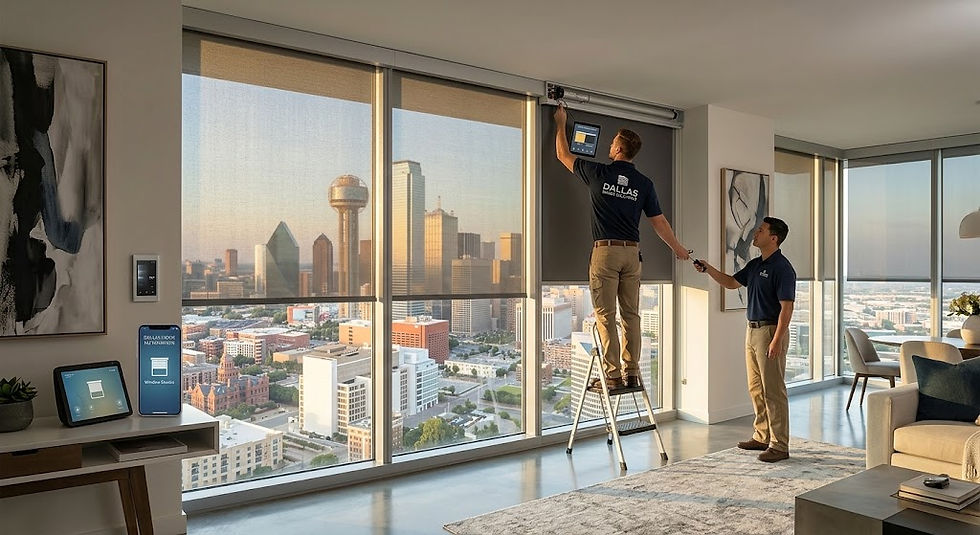
In a west-facing North Dallas home with a full glass wall, motorized roller shades reduced glare and indoor temperature while preserving outdoor views.
Custom Drapery: Insulation and Visual Balance
Drapery adds softness while improving thermal performance.
Best applications include:
Bedrooms requiring light control
Living areas with tall ceilings
Decorative or arched windows
Best practices:
Use room-darkening linings for bedrooms
Choose thermal linings for heat management
Layer with sheers to allow daytime light
Hybrid Solutions: Combining Function and Design
Some layouts benefit from layered treatments.
Roller shades manage heat and sunlight
Drapery adds texture, scale, and visual warmth
This approach is especially effective for large or irregular windows where both performance and aesthetics matter.
Fabrics and Materials That Perform in Texas Heat
Roller Shade Fabrics
Solar screen fabrics: Reduce glare while maintaining visibility
Light-filtering fabrics: Brighten rooms without harsh light
Blackout fabrics: Ideal for bedrooms and media rooms
Drapery Fabrics
Blended fabrics: Cotton blends balance comfort and durability
Synthetic fabrics: Polyester resists fading and staining
Textured weaves: Better at concealing dust and wear
All drapery should be paired with high-quality linings to extend fabric life.
Hardware and Installation Considerations
Curved tracks for arched windows
Reinforced mounting for wide or heavy treatments
Motorized systems for tall or difficult-to-access windows
Quality hardware ensures smooth operation and prevents long-term issues.
Real Dallas Case Examples
Modern West-Facing Home
Problem: Afternoon heat and glare
Solution: Motorized blackout roller shades
Result: Cooler interiors and improved comfort
Traditional Home with Arched Windows
Problem: Standard curtains did not fit
Solution: Custom drapery with curved tracks
Result: Proper coverage that matched the home’s style
Busy Family Bay Window
Problem: Multiple angles and frequent use
Solution: Individual roller shades with center drapery
Result: Easy control and a balanced appearance
Common Mistakes to Avoid
Inaccurate measurements
Skipping protective linings
Using low-quality hardware
Forgetting to plan for motorization wiring
Blocking doorways or walk paths
Professional planning helps prevent these costly errors.
Budget, Installation, and Care Tips
Custom treatments add long-term value and energy efficiency
High ceilings and skylights often require professional installation
Regular dusting and adherence to care guidelines extend lifespan
A Practical Step-by-Step Plan
Identify window shapes and sun exposure
Define goals for light control, privacy, and comfort
Select shades, drapery, or layered solutions
Measure accurately or use professional services
Choose durable fabrics and reliable hardware
Schedule proper installation
Maintain treatments regularly
The Real Challenge with Unique Windows in Dallas Homes
Unique window layouts amplify the effects of Dallas heat and sunlight. When treatments are not designed for the exact shape and exposure, homeowners experience ongoing discomfort, glare, and premature wear. Custom window treatments address these challenges directly by fitting the layout precisely and using materials engineered for Texas conditions—resulting in better comfort, protection, and long-term performance.
Choosing the Right Next Step for Your Windows
If your windows are difficult to cover, overheat rooms, or allow excessive glare, the issue is rarely the window itself—it is the treatment choice. Evaluating layout, sun exposure, and material performance before installation can prevent repeated replacements and improve daily comfort. Working with a Dallas-based window treatment specialist ensures solutions are designed specifically for local homes and climate demands. Contact Us Now
Comments